
What Would You Do With the Other Two Days?
Time, income, room to build: the biggest opportunity is giving people a real choice of what to do with AI’s gains.
- Maturity
- Emerging, stage 2 of 4
- Support
- 8 sources · report, paper, government, institution
- Evidence detail
- How we know ↓
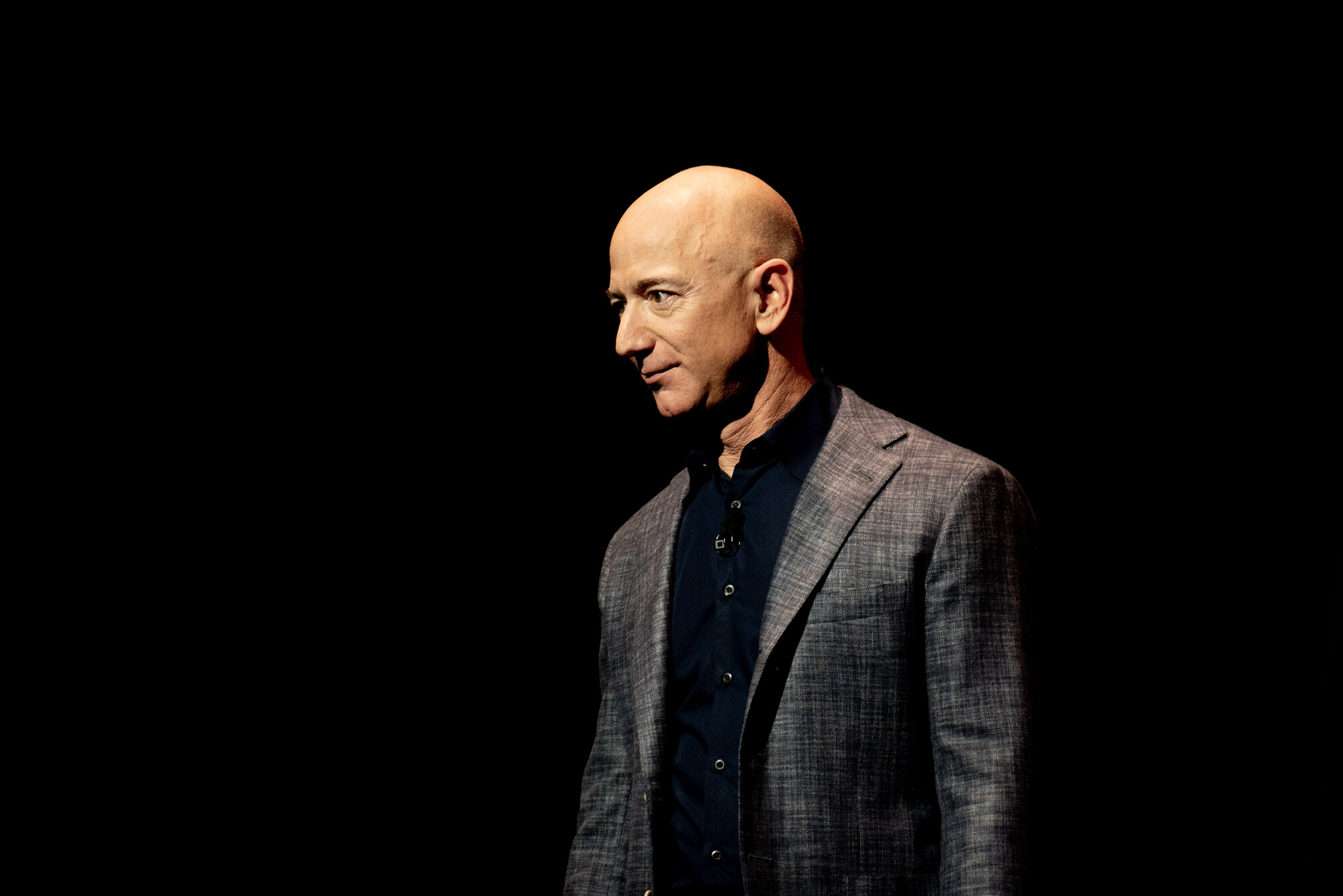
In a Fox News interview on October 7, Jeff Bezos suggested AI might let some people support a family on three workdays.
It is an appealing possibility. It is also a forecast, not an account of what AI has already delivered. And it leaves an important question open: What would people choose to do with the gains?
Time is valuable. So is agency.
For a parent racing between shifts and school pickup, two paid days back could change a life. For a burned-out worker, a shorter week could mean rest. For someone caring for an older relative, it could mean being present when needed. Any story about AI and a better life should take those choices seriously.
Surveys support the appeal of flexibility, though they cannot tell us that everyone wants the same schedule. In a 2024 Bentley–Gallup survey, roughly three-quarters of U.S. workers expected a four-day, 40-hour week to improve their well-being. That is a compressed schedule, not evidence that most workers would choose three days of paid work, especially if pay fell with hours.
Purpose complicates the picture in a useful way. In a Pew survey of U.S. workers who weren’t self-employed, 39% said their job or career was extremely or very important to their identity; others placed less weight on it. An earlier Pew study about meaning in life found family came up far more often than careers in Americans’ own words. Work can be a source of pride and connection. So can raising children, volunteering, learning, making art and caring for neighbors. Fewer paid hours need not mean less purpose.
At Bright, we highlight useful AI tools every day because they can give people the practical ability to make something they could not make before. A teacher might prototype a learning tool. A local shop owner might analyze inventory without hiring a data team. A neighborhood organizer might make a simple volunteer-matching app. These are examples of what accessible tools could enable, not claims that every idea becomes a business. The human still has to understand a need, win trust, make sound decisions and do the work.
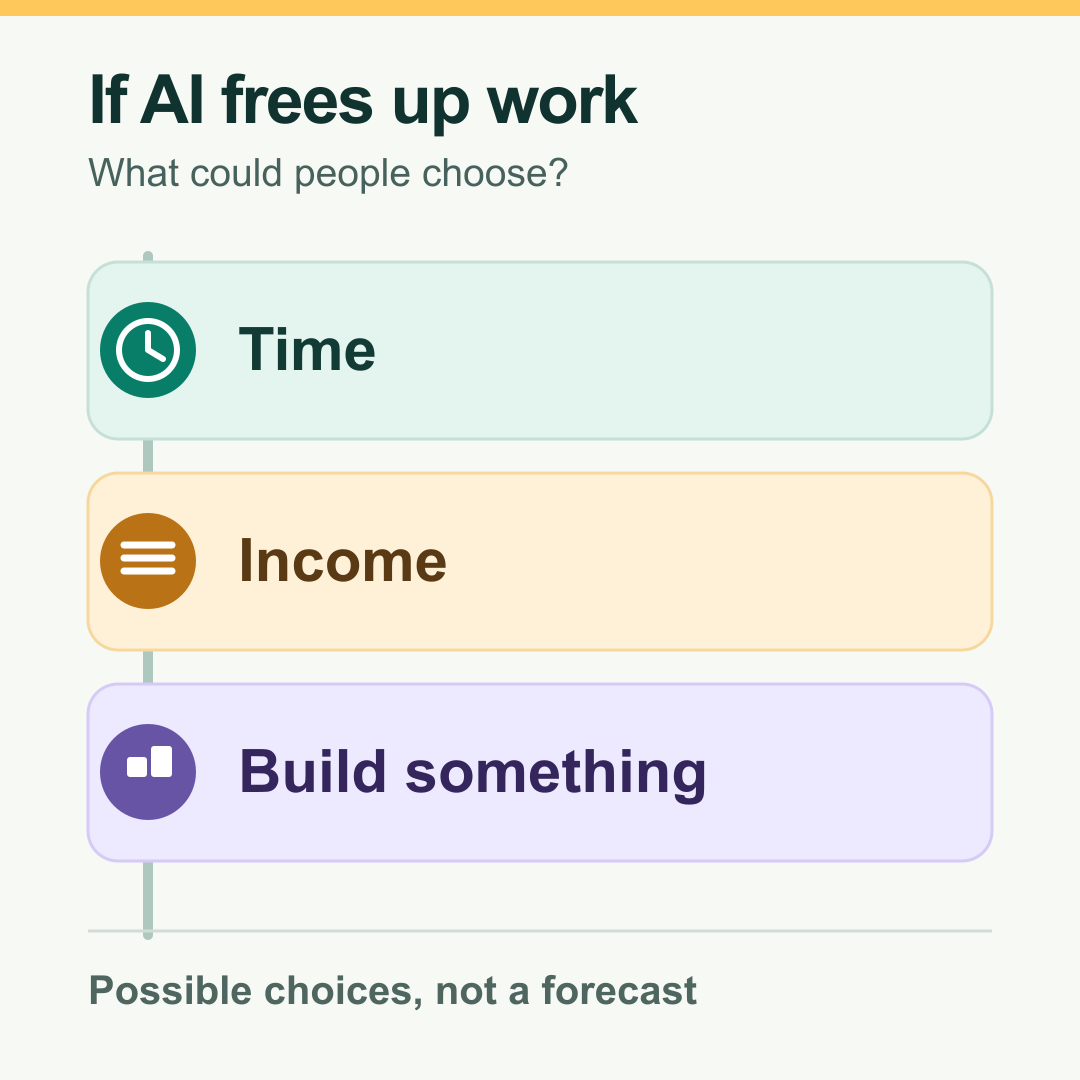
That prospect is exciting because many people want the chance to build. They may use saved hours to pursue an idea, switch careers, or simply improve how they do their existing job. The best outcome is room to choose, including the freedom to stop working when work is crowding out the rest of life.
Productivity does not write the paycheck
There is a hard economic step between a task becoming faster and a shorter workweek remaining affordable. If a person moves from five eight-hour days to three, keeping the same weekly earnings through hourly pay alone requires the hourly rate to rise by about 67%. More output per hour can make that possible in principle, but it does not decide who receives the gain. Employers could retain it; customers could get lower prices; workers could receive higher pay, shorter hours, or a mix. Bargaining power, competition, benefits, public policy and access to the tools all matter.
The evidence so far points to useful gains, not an automatic three-day week. In a randomized experiment across 66 firms and 7,137 knowledge workers, people given an integrated AI tool who used it spent about two fewer hours a week on email during the latter half of the six-month study and less time working after hours. Researchers did not detect a broad shift in the amount or mix of tasks from individual access alone. The study shows a real improvement for some office workers; it does not establish a whole-economy transformation, a wage increase, or the same benefits for jobs away from a keyboard.
History is a reason to ask how gains will be shared. The U.S. Bureau of Labor Statistics has documented industries where productivity grew faster than worker compensation. The measures are complex, but the basic lesson is plain: a more productive economy does not, by itself, guarantee more income or free time for every worker.
So the challenge raised by Bezos’s forecast is bigger than designing a new calendar. Can people who use AI share in what they produce? Can a worker choose time, income or a new project without losing the basics a family depends on? Can an aspiring builder get affordable tools, real skills and a fair chance to compete? And can we measure progress in both hours returned and possibilities opened?
We should celebrate the day a parent can afford to work less. We should celebrate the day someone uses AI to turn a long-held idea into something useful. A good future leaves room for both, with enough security to make the choice real.
Follow the evidence
Bright Weekly brings source-checked AI progress people can understand and use: five stories plus one useful thing each week. Sign up with the form below, or join Bright Weekly.
Photograph
Jeff Bezos at a Blue Origin lunar-lander event in Washington, D.C., May 9, 2019. Photo: Daniel Oberhaus / CC BY 4.0. Archival photo; it does not show the October 2026 interview. Resized from the original for display.
How we know8 sources · checked 2026-10-08 · no corrections
Original sources
- Fox News interview announcement · October 7, 2026 ↗ · report
- Fox News report on Jeff Bezos interview · October 7, 2026 ↗ · report
- Bentley University–Gallup Business in Society report · 2024 ↗ · report
- How Americans view their jobs · Pew Research Center ↗ · report
- Where Americans find meaning in life · Pew Research Center ↗ · report
- Generative AI at Work? Randomized experiment across 66 firms · NBER ↗ · paper
- Understanding the labor productivity and compensation gap · U.S. BLS ↗ · government
- Jeff Bezos Unveils Blue Origin Lunar Lander · Daniel Oberhaus / Wikimedia Commons ↗ · institution
Institutions: Bright Editorial
- Maturity
- Emerging
- Event date
- 2026-10-07
- Source published
- 2026-10-08
- Captured
- 2026-10-08
- Last source review
- 2026-10-08
- Editorial method
- AI-assisted source review
- Place / relevance
- United States · unspecified
Bright compared this account with the linked original and supporting sources and kept reported, budgeted, projected, and observed claims distinct. Bright did not independently audit the underlying records.
Maturity describes the tested or operational setting. Confidence describes support for the particular claim; one does not determine the other.
Revision & correction history
2026-10-08T16:32:11.179Z · First publication of source-checked Bright analysis of Bezos’s three-day-workweek forecast, worker choice, income and purpose, with an archival licensed photograph and original Bright illustration.
2026-10-08T16:40:14.000Z · Presentation revision at owner request: removed the optional link to the choice illustration and its caption. The published analysis, source evidence, licensed archival Bezos photograph, and newsletter signup remain unchanged.
2026-10-08T18:03:14.000Z · Owner-approved presentation revision: display the original Bright Time / Income / Build something illustration directly in the article after the agency discussion, with visible qualification, credit and rights. Preserve the archival Bezos hero and existing analysis.
No corrections recorded.
Keep exploring
Explore the shared question in another setting. These connections do not imply replication.