
Claude helps design quantum circuits that need fewer resources
Researchers used AI proposals and automated checks to improve circuit designs. The results concern estimated resource requirements, with trade-offs and verification limits that matter.
- Maturity
- Experimental, stage 1 of 4
- Support
- 3 sources · institution, paper
- Evidence detail
- How we know ↓
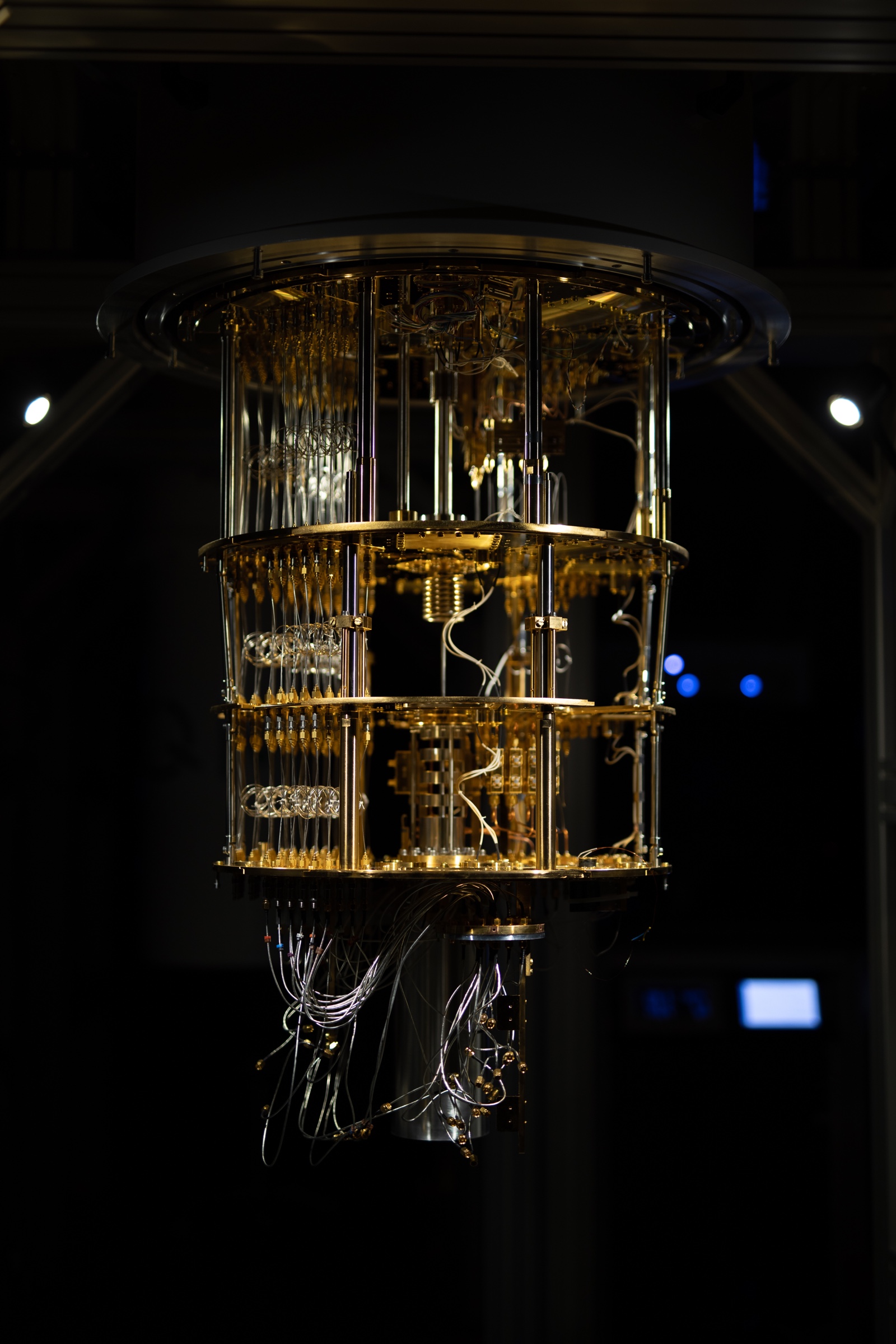
Making quantum computers useful requires more than building better hardware. Researchers also need ways to carry out computations with the resources a machine can supply.
A team working with Anthropic reports that Claude Mythos 5 helped develop more efficient quantum-circuit designs. Researchers supplied task specifications, automated evaluators and occasional prompts to broaden the search; the model proposed and revised implementations using evaluator feedback. Anthropic announced the work on October 16, following an October 15 preprint. Announcement · Preprint record
Seven reductions, and an eighth trade-off
The paper reports lower Toffoli-gate and qubit counts on seven of eight tasks. Toffoli gates are costly operations; qubits are the quantum information units the computation needs. The eighth task improves the available trade-off between those resources. That distinction is more precise than saying every task used fewer of both. Paper abstract
One point-addition design illustrates the trade-off: compared with the smallest prior design, it uses 12% more qubits and 17 times fewer gates. A design can therefore be attractive without being the smallest in every dimension. Point-addition comparison
The work addresses a particular difficulty of quantum computation: intermediate information must be cleaned up while preserving the required reversible behavior. Changing how that information is represented and recovered can reduce the resources needed. Research paper
What the checks establish
Separate automated evaluators test correctness and count resources. They are part of the research setup, not independent third-party replication. Large input spaces are sampled, and some tasks permit bounded failure probabilities under specified input distributions. Those assumptions belong alongside the improvements. Methods
These are circuit resource estimates, not measured speed gains on quantum hardware or a demonstration of practical quantum advantage. The preprint does not establish new medicines or better batteries. Independent replication has not been established by Bright's source review.
The promising possibility is a more productive way for researchers to explore designs they can specify, check and compare. Whether a particular circuit helps a practical machine depends on the wider algorithm, hardware and error-correction requirements.
What was shown, and what wasn’t
Shown
The October 15, 2026 preprint reports reduced Toffoli-gate and qubit counts on seven of eight tasks, with an improved resource trade-off on the eighth. One point-addition design uses 12% more qubits and 17 times fewer gates than the smallest prior design.
Not shown · limits
- This is a preprint and circuit-design resource evaluation, not a deployment on quantum hardware or a measurement of hardware speed.
- Seven tasks reduce both resource counts; the eighth improves a trade-off. A blanket claim that all eight use fewer of both is unsupported.
- Automated evaluators belong to the research setup; large input spaces are sampled and some tasks permit bounded failure probabilities under specified distributions.
- Independent replication, practical quantum advantage, new medicines and better batteries are not established by Bright’s source review.
Bright editorial interpretation
AI-assisted search could help researchers explore circuit designs whose correctness and resource requirements can be checked and compared.
Still open
Can independent teams reproduce the designs and establish useful gains within complete algorithms, hardware constraints and error correction?
How we know3 sources · checked 2026-10-17 · no corrections
Original sources
- Anthropic announcement ↗ · institution
- Preprint record ↗ · paper
- Paper and methods ↗ · paper
Institutions: Anthropic and research collaborators
- Maturity
- Experimental
- Event date
- 2026-10-16
- Source published
- 2026-10-15
- Captured
- 2026-10-17
- Last source review
- 2026-10-17
- Editorial method
- AI-assisted source review
- Place / relevance
- Circuit-design study · research-system
Bright compared this account with the linked original and supporting sources and kept reported, budgeted, projected, and observed claims distinct. Bright did not independently audit the underlying records.
Maturity describes the tested or operational setting. Confidence describes support for the particular claim; one does not determine the other.
Revision & correction history
2026-10-17T13:08:04.522Z · Initial source-checked report on quantum circuit-design resource improvements, trade-offs, evaluator assumptions and preprint-only limits.
No corrections recorded.