
Anthropic puts real deployment work at the center of AI training.
Claude Frontier Academy links engineering instruction to a workplace project. Its usefulness will depend on what participants can safely deliver afterward.
- Maturity
- Emerging, stage 2 of 4
- Support
- 3 sources · institution
- Evidence detail
- How we know ↓
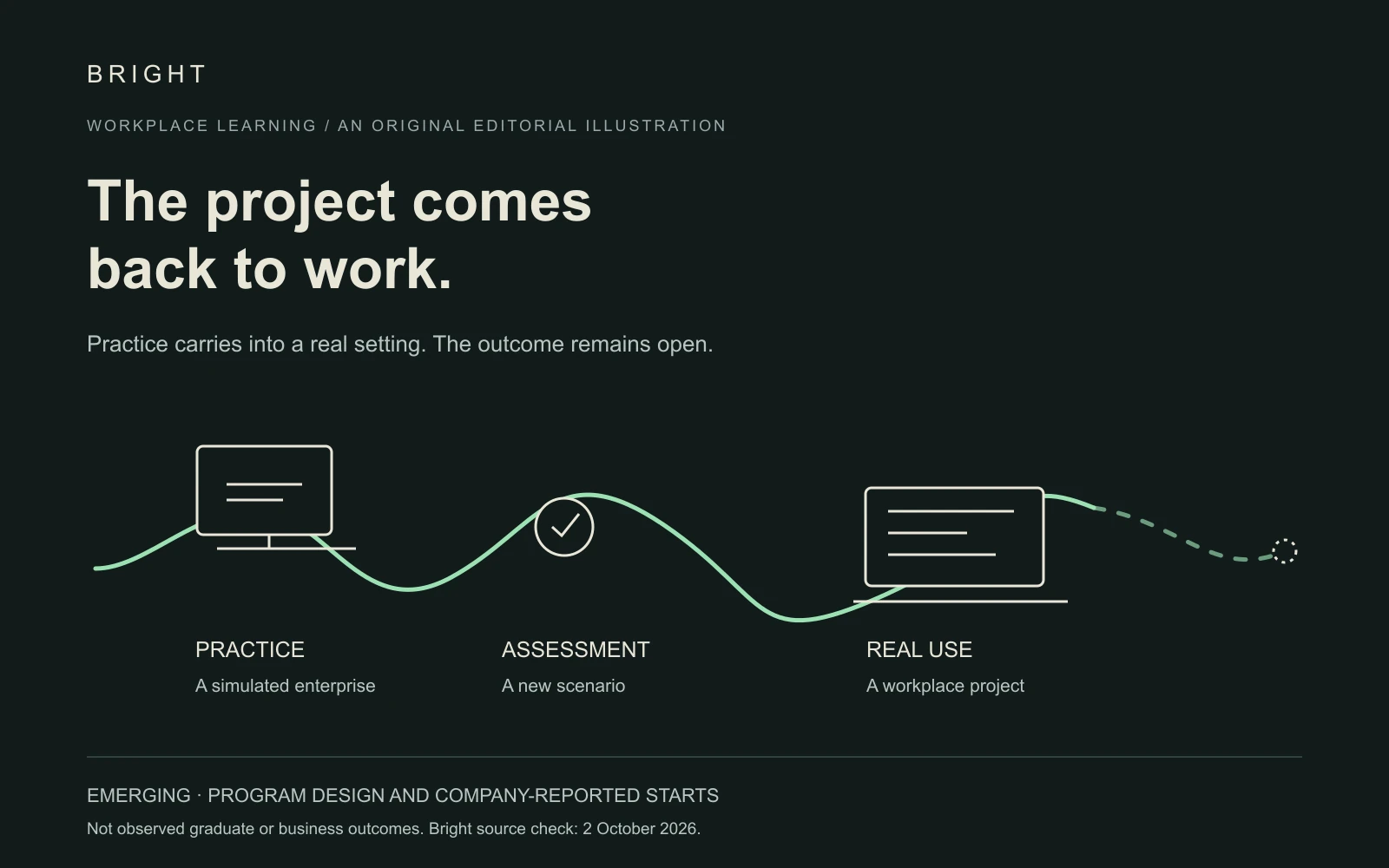
Learning to build an AI system is different from making it useful to the people who rely on it. Engineers must understand a workflow, work within its security requirements and help colleagues use the result. A course can introduce those skills; their value becomes clearer when a real team uses the work.
A demonstration or course-completion count cannot show whether a system survives contact with an organization’s data, responsibilities and daily work. Training needs a way to carry practice into that setting, with people who can assess the handover and what happens afterward.
Participants build systems with Claude, moving from a request through security review and handover. Claude is the tool used in the work; this is a workforce-development program, not evidence that an AI model independently trains or replaces engineers.
What was shown, and what wasn’t
Shown
Anthropic’s October 2 announcement commits $100 million to Claude Frontier Academy and targets 10,000 Frontier Deployed Engineers by the end of 2027. The company says initial cohorts are underway in San Francisco, New York and London. The program describes a four-day intensive: three days building for a simulated enterprise, followed by an assessed new scenario. Those who pass then lead a 12-week Claude deployment at their own employer, with mentorship, before a final practical assessment. Anthropic expects the first final credentials in early 2027. These are a program design, company-reported starts and future targets, not a count of qualified graduates.
Not shown · limits
- Early access is nomination-only for selected enterprise customers and partners through account teams or partner managers. It is not an open-entry career course. Tuition, completion rates and graduate outcomes are not established in the checked sources.
- The $100 million commitment and 10,000-engineer target do not establish spending completed, jobs created, higher pay or business improvements. Final credentials are expected in 2027; no graduate outcome is claimed here.
- Anthropic announced a $100 million Partner Network commitment in March. The checked sources do not resolve its funding relationship to the Academy commitment; Bright does not add them together or count earlier partner certifications as Academy graduates.
Bright editorial interpretation
Bright’s analysis: the strongest idea is continuity between learning and real work. A participant brings a named project, practices the difficult parts, then returns to the organization that needs it. That gives colleagues something more useful to inspect than a certificate alone: a system, a handover and a record of how it behaves. The workplace project should earn its place. Name the people it serves and the constraint it changes. Set a baseline for task time, quality and errors before adopting it. Give a team responsibility for permissions, failures and maintenance, and check whether colleagues keep using the system after the residency ends. Faster work is only useful if the quality and security hold. For an organization considering nomination, the practical questions include who can participate, how much time the employer must protect, what the participant and employer pay, and who assesses the final work. For a worker outside those organizations, this initial route may not be available. The next evidence is completed assessments and inspectable workplace outcomes: sustained use, measurable improvements, error and security results, and assessment beyond the provider. A cohort can be a promising start. The useful achievement is work that others can safely rely on.
Still open
Who completes the assessed residency, and how are the results independently checked?
Do workplace projects remain useful, secure and maintained after the program ends?
What do participation, tuition and protected workplace time cost, and who can access the next cohorts?
How we know3 sources · checked 2026-10-02 · no corrections
Original sources
- Anthropic Academy announcement · October 2, 2026 · company commitment and first cohorts ↗ · institution
- Claude Frontier Academy program · checked October 2, 2026 · nomination, assessments and residency ↗ · institution
- Anthropic Partner Network announcement · March 12, 2026 · separate earlier commitment; funding overlap unresolved ↗ · institution
Institutions: Anthropic
- Maturity
- Emerging
- Event date
- 2026-10-02
- Source published
- 2026-10-02
- Captured
- 2026-10-02
- Last source review
- 2026-10-02
- Editorial method
- AI-assisted source review
- Place / relevance
- San Francisco, New York and London; initial company-reported cohorts · unspecified
Bright compared this account with the linked original and supporting sources and kept reported, budgeted, projected, and observed claims distinct. Bright did not independently audit the underlying records.
Maturity describes the tested or operational setting. Confidence describes support for the particular claim; one does not determine the other.
Revision & correction history
2026-10-02T21:19:28.047Z · Anthropic puts real deployment work at the center of AI training.
No corrections recorded.
Keep exploring
Explore the shared question in another setting. These connections do not imply replication.