
Dream-1’s $3-an-hour robot AI tests a new route to useful machines
A promising benchmark and reported transfer across robot bodies point toward cheaper experimentation. Reliable deployment remains a separate test.
- Maturity
- Experimental, stage 1 of 4
- Support
- 5 sources · institution, dataset
- Evidence detail
- How we know ↓
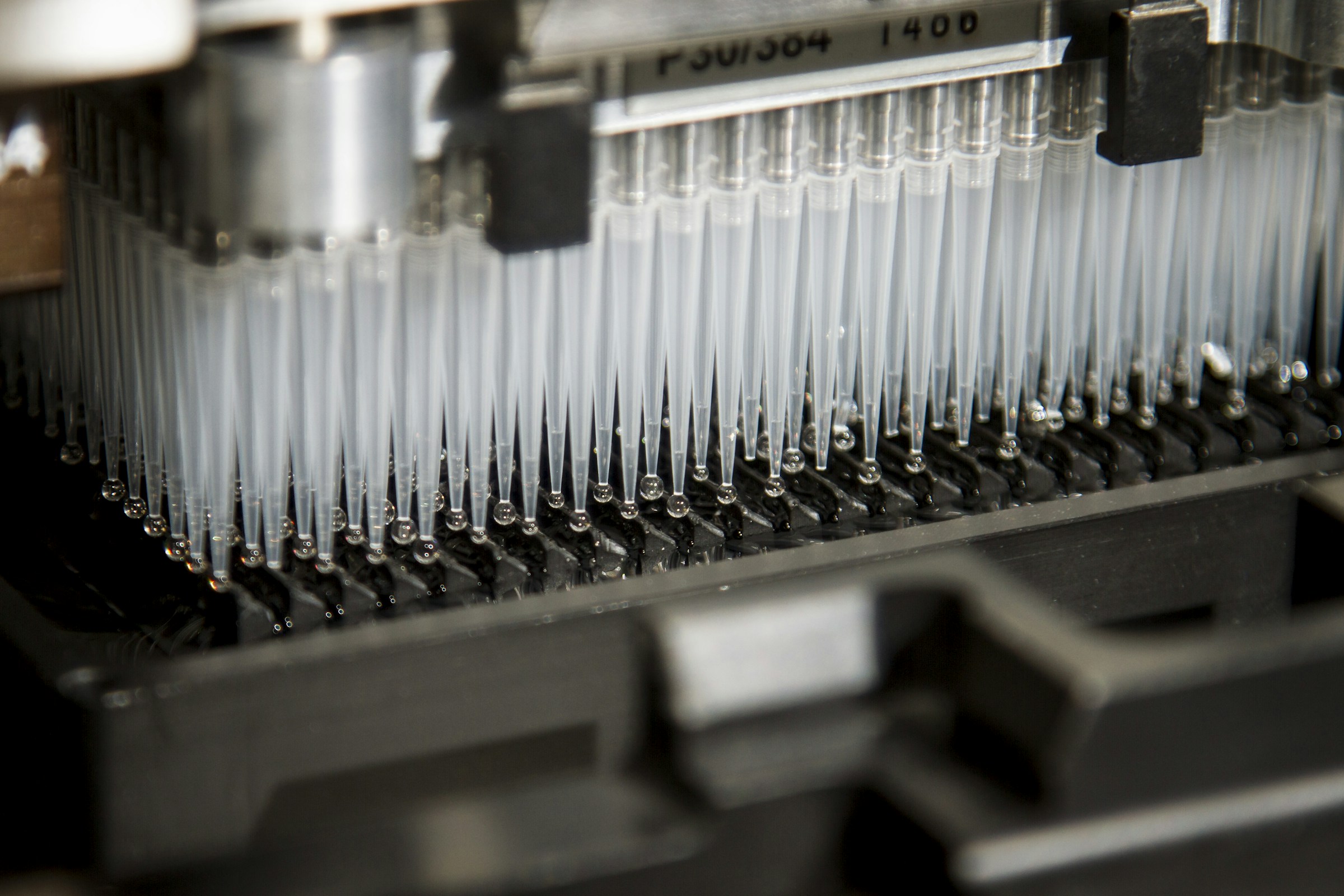
Moving a cup sounds like a small achievement until you consider what a robot must coordinate: recognizing the cup, choosing a grip, reaching without knocking something over, and letting go at the right moment. Change the arm, the gripper or the table, and a system that looked capable yesterday may need substantial work again.
Dream Labs is trying to make that restart less painful. The company says its new Dream-1 model can control unfamiliar two-arm robots through a public API. It lists standard inference at $3 per hour and a Flash version at $2. The announcement is dated October 2026.
The encouraging possibility is that robot builders could spend less time teaching each new machine the basics and more time discovering where it is useful. For people watching AI move beyond screens, that would be an important kind of progress: more teams able to test practical ideas, without each having to invent a robot’s intelligence from the beginning.
There is evidence worth examining here. There are also several distinct claims that need to stay distinct.
A shared way to tell different robots what to do
Imagine giving two people the same instruction to put a mug on a shelf. Their arms may differ in length, but the desired result is understandable to both. A machine needs a more explicit translation between the goal and the movements its body can make.
Dream Labs reports transfer to unseen bimanual robots with parallel grippers. Dream-1 predicts gripper positions; each robot’s inverse-kinematics software translates those targets into joint movements. The company acknowledges dependence on that solver, limits with substantially different reach or dynamics, and a loss of control over the arm’s full path. Its technical explanation sets out those boundaries.
That interface gives the idea an intuitive appeal. Builders could agree on where a gripper should go without requiring every machine to have identical joints. But a useful destination and a safe route to it are different engineering problems. A target above a table may be reachable in several ways, some of which collide with an object along the way.
The underlying research direction also matters. The earlier DreamZero project describes a world action model that learns to predict future video and robot actions together. Its premise is that modeling how a scene will change can help a machine choose movements. That work reported adapting to a YAM robot using 30 minutes of its data, while retaining generalization to new tasks.
For a non-specialist, the interesting idea is the link between anticipation and action. A useful robot must continually connect “what I am trying to change” with “what my movement will do.” Learning those together is an appealing approach. How widely it transfers still needs repeated testing, particularly when the next body is less like the ones used before.
What the robotics benchmark actually measures
On Robocurve’s public comparison, Dream-1 records 59.3% mean task progress across 120 attempts, the highest displayed result among the listed configurations. The table puts hosted inference at about $0.15 per attempt. These figures describe one evaluation setup, rather than a universal ranking of robot intelligence.
The RoboDojo-RC Tier 1 methodology covers six tasks selected as the easiest, highest-scoring subset after testing an earlier model on 18 tasks. They include stacking bowls, capping a pen and standing bottles upright. Each has 20 trials. A score can represent partial progress: in the pen task, picking up an object earns credit well before the cap is attached. Consequently, 59.3% mean progress does not mean 59.3% of jobs were completed.
That distinction changes the practical interpretation. Half-finishing a tidy-up may demonstrate meaningful control. It may still leave a person with almost all the responsibility for checking the result and completing the work. Progress scores are useful for tracking research; a buyer will eventually care about complete outcomes, intervention rates and the consequences of mistakes.
The downloadable Dream-1 records identify hosted, end-effector control and label the grades as automated and re-graded against an older rubric. They retain original grades and revised explanations. Public logs and video links make scrutiny possible, but those labels should accompany the headline score.
There is another boundary: the documented benchmark uses YAM arms, the robot family Dream Labs says Dream-1 trained on. It therefore cannot, by itself, establish transfer to a new body. Robocurve describes itself as an independent evaluator, while Dream Labs lists it as a beta partner. Readers should know that relationship rather than encounter an unqualified claim of independence. The benchmark platform and partner listing are public.
Why cheaper experiments could matter
The most interesting economic effect may arrive before anyone has a dependable general-purpose household robot.
Consider a small team exploring whether a robot could sort a narrow set of objects at a workstation. Its first question is whether the idea is feasible. If each trial requires a long custom-model project, promising applications can be expensive to investigate. An accessible model service could make it easier to discover quickly which ideas merit more work and which should be abandoned.
That is an inference about the opportunity, not evidence that Dream-1 has already delivered those savings. A low model bill can coexist with expensive setup, supervision and repairs. The useful measure is the cost of a satisfactory outcome, including the human time needed to achieve it.
Suppose an experiment takes ten retries and someone must reset the objects each time. Inference might be a small part of the bill. Improve the success rate enough to remove most interventions, and the same hardware could become much more useful without any change to the hourly model price. Reliability can be an economic breakthrough in its own right.
Cheap experiments nevertheless have value. They let more people encounter real limitations instead of judging a product from a successful demonstration. A healthy outcome would be a larger body of repeatable results, including failures, across machines and settings.
An API, a robot and a dependable service are three different things
Model access answers whether a builder can obtain predictions. Hardware integration answers whether a particular machine can execute them. Deployment asks whether the whole system can do worthwhile work reliably enough in the place where somebody needs it.
Those layers deserve separate tests. An integration trial should establish whether commands are interpreted correctly. A task trial should count completions and interruptions. A deployment trial should examine unfamiliar objects, recovery from mistakes and behavior around people. Collapsing these stages into “the robot works” makes it harder to see what has actually improved.
Dream Labs calls Dream-1 a research beta and says it has not been validated for safety-critical use. That warning is explicit. The quoted inference prices should be read as the company’s advertised rates, rather than a verified cost for operating a working robot.
For everyday readers, this is a development to watch rather than evidence that a home robot is ready to take over the chores. The next persuasive results would show complete tasks repeated across genuinely unfamiliar robots, transparent grading and less human rescue as conditions change.
The optimistic reading is grounded in that path. If intelligence can become easier to move between bodies, more builders can investigate useful machines. Dream-1 offers an early signal worth testing. The larger achievement will be turning that initial access into dependable help.
What was shown, and what wasn’t
Shown
Dream Labs advertises standard inference at $3 per hour and Flash at $2. Robocurve reports 59.3% mean task progress across 120 attempts at about $0.15 per attempt on YAM arms; this measures partial progress, not completion or transfer to unfamiliar bodies.
Not shown · limits
- Research beta; not validated for safety-critical use.
- Mean task progress does not equal task completion. Automated grades were re-graded against an older rubric.
- The benchmark uses YAM arms, the family used in training, and does not establish transfer to a new body.
- Dream Labs lists Robocurve as a beta partner; its stated evaluator independence is not an unqualified claim of institutional separation.
- Advertised inference prices exclude setup, hardware, supervision, resets and repairs.
- Inverse-kinematics dependence and different reach or dynamics limit transfer and control of the full arm path.
Bright editorial interpretation
Accessible model services could let more teams test practical robot applications, while dependable outcomes and total operating costs still need evaluation.
Still open
Can complete tasks be repeated across unfamiliar robots with transparent grading, fewer interventions and dependable recovery?
How we know5 sources · checked 2026-10-20 · no corrections
Original sources
- October 2026 ↗ · institution
- DreamZero project ↗ · institution
- Robocurve’s public comparison ↗ · institution
- RoboDojo-RC Tier 1 methodology ↗ · institution
- downloadable Dream-1 records ↗ · dataset
Institutions: Dream Labs · Robocurve
- Maturity
- Experimental
- Source published
- 2026-10-20
- Captured
- 2026-10-20
- Last source review
- 2026-10-20
- Editorial method
- AI-assisted source review
- Place / relevance
- Robotics research · unspecified
Bright compared this account with the linked original and supporting sources and kept reported, budgeted, projected, and observed claims distinct. Bright did not independently audit the underlying records.
Maturity describes the tested or operational setting. Confidence describes support for the particular claim; one does not determine the other.
Revision & correction history
2026-10-20T14:44:01.002Z · Initial approved source-based article on Dream-1 pricing, transfer claims, benchmark and deployment limits.
No corrections recorded.