
A Swedish speech model brings fast transcription closer to home.
Klang’s released speech model offers a practical choice about where Swedish audio is processed. Its benchmark gains are promising, with important differences between speed and accuracy.
- Maturity
- Emerging, stage 2 of 4
- Support
- 9 sources · institution, repository, report
- Evidence detail
- How we know ↓
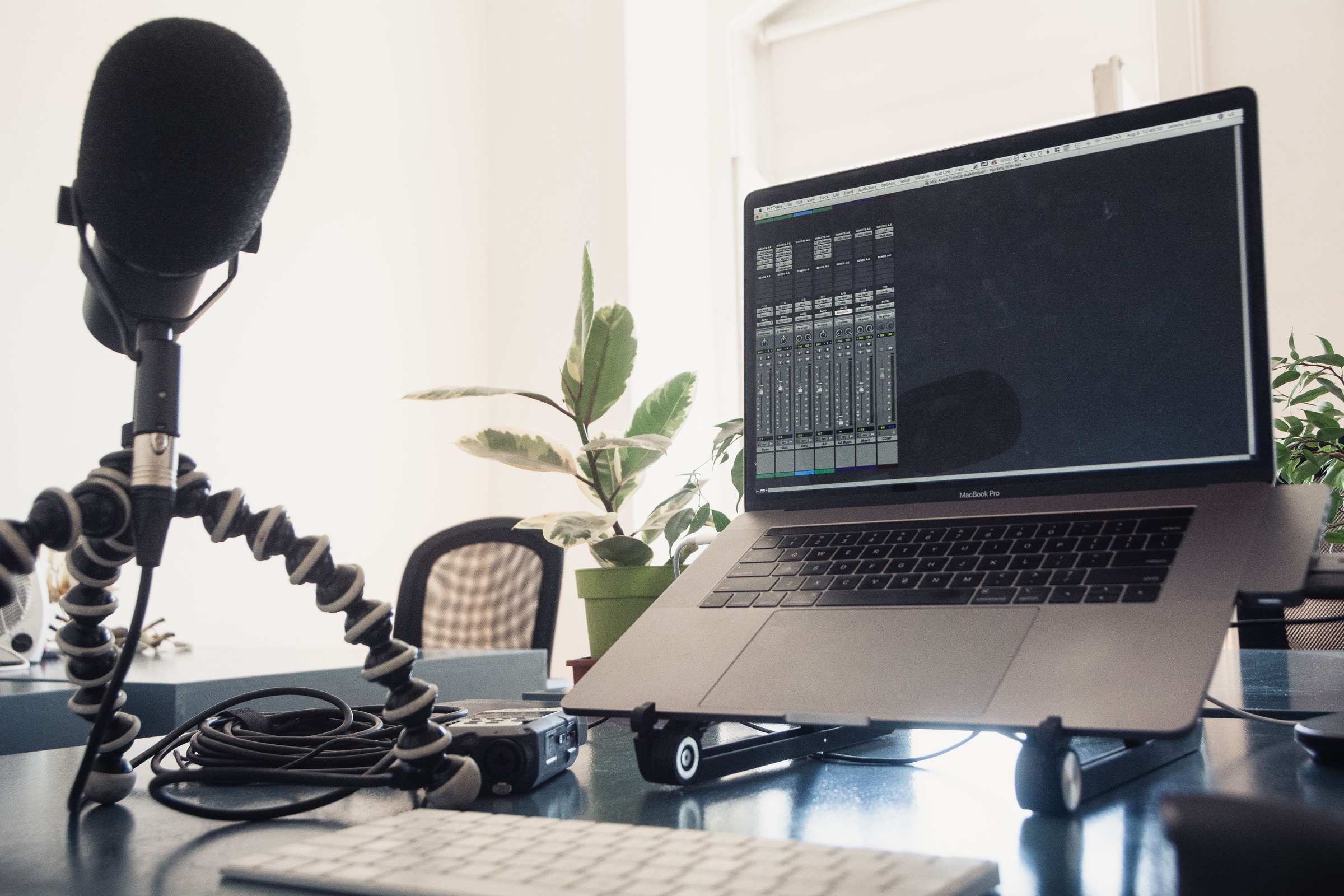
Turning a recording into text can make an interview easier to search, a lecture easier to revisit or a draft easier to write. For Swedish speakers, a newly released speech model offers another way to do that work on their own computers.
Klang’s Pianissimo adapts NVIDIA’s Parakeet v3 for Swedish. Its downloadable model weights were released on September 23, followed by smaller local-computer versions on September 28. NVIDIA highlighted it in an October 14 roundup of Nordic AI projects. This is software people can obtain now, although its reported performance still needs testing in the situations where they would use it. Klang’s release page · NVIDIA’s roundup
The model has about 600 million parameters and is released under CC BY 4.0. It produces text with punctuation and can supply word-level timestamps. Klang says it fine-tuned the system on approximately 50,000 hours of Swedish speech. Model documentation
Two gains, two different comparisons
The attractive headline numbers use different baselines: roughly 75% fewer transcription errors than original Parakeet, and about 64 times the bulk processing speed of KB-Whisper large.
In Klang’s evaluation, which gave equal weight to five datasets, mean word error rates were 17.7% for Parakeet, 4.5% for Pianissimo and 3.5% for KB-Whisper large. Lower is better, so KB-Whisper large remained more accurate on that average.
On an NVIDIA A100 graphics processor, Pianissimo processed audio at roughly 2,500 times real time, against 39 times for KB-Whisper large. Klang tested 30-second clips in batches, using different software frameworks and each model’s fastest tested configuration, excluding model loading. That does not establish a 64-fold speed-up on an ordinary laptop. Klang’s technical report
That trade-off matters. Someone processing a large archive may value throughput differently from someone checking a short, difficult interview. The useful question is how quickly they can get a transcript they trust, including the time spent correcting it.
What running locally changes
Klang has released versions that run on ordinary computer processors, including a 660 MB version, alongside versions for Apple-silicon graphics hardware. Their published speed tests name the hardware used, so readers can separate availability from the performance of a particular machine. CPU version · Mac version
The company also provides a command-line tool for local files. Its documentation says transcription runs on the computer, with no audio upload to a transcription service, and local files can be processed offline after setup. This particular tool downloads the full 2.51 GB model, rather than the smaller versions above, and its documentation asks for at least 10 GB of free space for a CPU installation. It also requires Node.js, Python and FFmpeg. This route will be more approachable for people comfortable with technical setup. Pianissimo CLI
There is an important distinction when trying it: the demonstration on Klang’s website sends uploaded audio to Klang. Downloading a model for local use and uploading a recording to a web demonstration are different choices about where that recording goes. Demo disclosure
Keeping processing on a computer can reduce the need to send recordings elsewhere. It does not settle every privacy question. The CLI documentation says completed transcripts are cached locally. People still need to consider who can access their device, how recordings and transcripts are stored, and whether everyone involved is comfortable being recorded. Storage documentation
The next test is everyday speech
Klang warns that overlapping voices, heavy background noise, unusual names and specialist vocabulary can reduce recognition quality. Performance on other languages and switching between languages has not been established. Model limitations
Bright’s assessment is that this release is worth following because it combines language-specific development with a concrete choice of where the software runs. A useful next test would compare the total effort needed to produce checked transcripts from real interviews, meetings and lectures, including difficult passages.
The evidence so far supports a released tool and encouraging company benchmarks. Whether it saves people time, improves access to information or handles their particular conversations well remains a question for use and independent evaluation.
What was shown, and what wasn’t
Shown
Weights were released September 23, 2026, with local variants on September 28; NVIDIA highlighted the release October 14. Klang reports mean word error rates of 17.7% for Parakeet, 4.5% for Pianissimo and 3.5% for KB-Whisper large over five equally weighted datasets, and A100 batch processing at roughly 2,500 times real time versus 39 times for KB-Whisper large.
Not shown · limits
- Results are company-reported. Bright has not run the software, reproduced benchmarks or independently audited its data flows.
- The accuracy and speed headline figures compare different baselines; KB-Whisper large remained more accurate on the reported mean.
- A100 throughput on batched 30-second clips, excluding model loading and using different frameworks, does not establish laptop speed.
- The 660 MB ONNX version is separate from the CLI’s full 2.51 GB model download and documented 10 GB free-space CPU requirement.
- The website demo uploads audio to Klang; local runtimes and hosted services have different data paths.
- Completed CLI transcripts are cached locally; local processing alone does not establish privacy.
- Overlapping voices, heavy noise, unusual names and specialist vocabulary can reduce quality. Other-language and code-switching performance is not established.
- Time savings, accessibility gains and everyday usefulness remain unmeasured.
Bright editorial interpretation
A language-specific released model provides a concrete local-processing option for people producing Swedish transcripts, while practical value still depends on setup and correction effort.
Still open
How much total effort, including transcript correction and technical setup, does Pianissimo save on real Swedish interviews, meetings and lectures?
How we know9 sources · checked 2026-10-16 · no corrections
Original sources
- Demo disclosure ↗ · institution
- NVIDIA’s roundup ↗ · institution
- Model documentation ↗ · repository
- Klang’s technical report ↗ · report
- CPU version ↗ · repository
- Mac version ↗ · repository
- Pianissimo CLI ↗ · repository
- Storage documentation ↗ · repository
- Model limitations ↗ · repository
Institutions: Klang · NVIDIA
- Maturity
- Emerging
- Event date
- 2026-09-23
- Source published
- 2026-09-23
- Captured
- 2026-10-16
- Last source review
- 2026-10-16
- Editorial method
- AI-assisted source review
- Place / relevance
- Sweden · unspecified
Bright compared this account with the linked original and supporting sources and kept reported, budgeted, projected, and observed claims distinct. Bright did not independently audit the underlying records.
Maturity describes the tested or operational setting. Confidence describes support for the particular claim; one does not determine the other.
Revision & correction history
2026-10-16T14:14:08.385Z · Initial source-checked account of the released Swedish speech model, benchmark comparisons, local and demo data routes, setup requirements and limits.
No corrections recorded.