
New York is asking hard questions about AI
Progress deserves serious attention too
- Maturity
- Emerging, stage 2 of 4
- Support
- 25 sources · government, report, paper, institution
- Evidence detail
- How we know ↓
Latest source check: October 5, 2026 at 7:40 p.m. EDT. The update labels distinguish verification times from event and source publication times.
We’ll update this analysis throughout the day as verified testimony and developments become available.
New York City’s AI-risk hearing puts safety and accountability on the agenda. Bright’s view is that a useful public debate also needs a clear account of what AI is already helping people do.
This analysis draws on the Council’s published agenda and exhibits, clearly labeled written submissions, and attributed reporting on the hearing. Reported testimony is identified as such.
What New York is examining
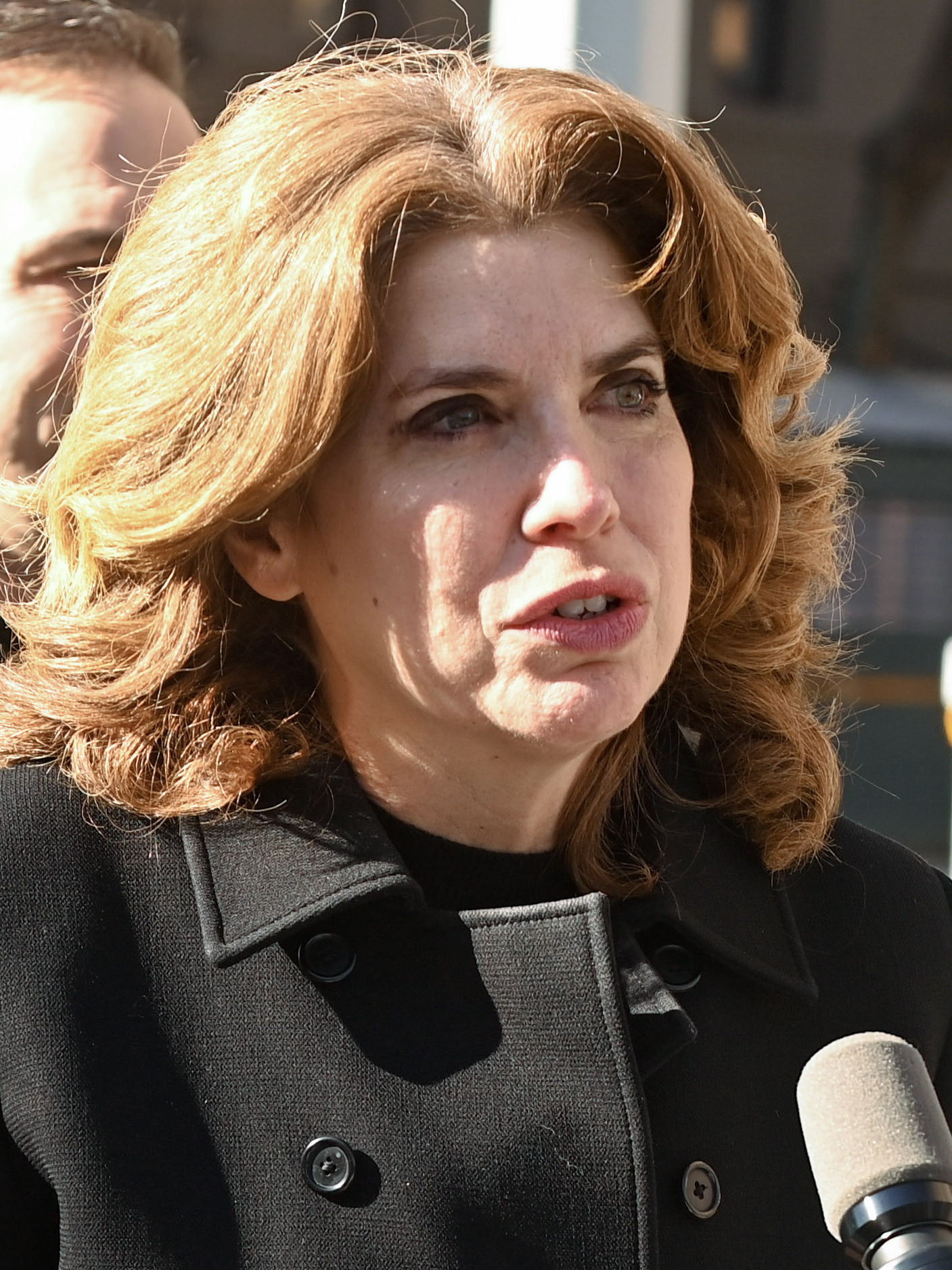
New York City’s October 5, 2026 AI hearing puts safety and accountability before the Council’s Committee of the Whole. The official meeting page listed the session as in progress at 11:42 a.m. EDT. Its published agenda covers ten legislative proposals, from independent model validation and human shut-down capability to chatbot privacy, incident reporting, workforce effects and protections for people who report dangerous conduct. Official agenda.
These are proposals under consideration. The hearing does not itself make them law. The Council’s advance announcement said Anthropic, OpenAI, Google and Meta had agreed to appear. This analysis examines the published proposals and the wider debate they raise. Council witness announcement.
There are serious questions here. What happens when a system gives harmful advice, exposes personal information or takes an action its operator did not authorize? What should a developer have to test and disclose? Who can stop a system, and who is accountable when safeguards fail?
Bright’s view is that demanding answers belongs alongside a serious account of progress. People need enough evidence to understand what they should protect against and what they could gain.
One published preview illustrates why the debate deserves specificity. In remarks he posted ahead of the hearing, scientist Gary Marcus argues for independent review before AI products reach the market and supports the Council’s validation proposal. He also expresses doubt that human extinction is imminent. These are his prepared views, not a verified account of what he said in the room. Marcus’s published preview.
A fuller public picture
Risk-focused coverage has clear examples. Axios’s September 28 headline warned of an “intelligence explosion,” while acknowledging uncertainty. AP reported an FTC investigation into possible consumer risks. These are legitimate subjects for reporting. Axios report. AP report.
Those examples do not establish how the whole media covers AI. Bright’s argument is an editorial one: advances that improve a concrete task or create a useful new capability deserve sustained attention, with the evidence close enough for readers to check.
The Council’s own framing leaves room for that approach. Its briefing paper discusses benefits as well as risks. Speaker Julie Menin’s September 25 announcement said, “We can and must be both pro-innovation and pro-safety.” We should judge proposals by how well they protect people and support useful, accountable applications. Council briefing paper. September 25 announcement.
Progress with evidence attached
Consider a clinical result already documented by Bright. In the TAILORED-AF randomized trial, an AI system identified additional electrical targets for a procedure treating persistent atrial fibrillation. At 12 months after one procedure, the estimated proportion free from documented atrial fibrillation was 88% in the tailored-treatment group and 70% with the standard procedure, with or without antiarrhythmic medication. Trial paper and disclosures.
The February 2025 study also found no significant difference in freedom from all atrial arrhythmias after one procedure, and procedure and ablation times were roughly doubled. Several authors disclosed ties to the developer. The result is encouraging evidence about a particular treatment strategy, with tradeoffs clinicians still have to weigh.
Read Bright’s story: Personalizing an ablation for persistent AF
At Carnegie Mellon, researchers connected a written description to a brick design and a two-arm robotic assembly plan. Bright’s recent story shows a guitar-shaped model emerging from that process. The underlying research dates to August 2025. It is a constrained experiment involving specific parts and robot skills, with human help still needed for some failures. The object is a model, and the edited video does not establish construction speed. Research paper. Project demonstrations.
Read Bright’s story: CMU robots turned a sentence into a LEGO guitar
Aleph Alpha’s October 3 Kolibri release illustrates another kind of progress: more choice over where an organization runs AI. Its downloadable German-English model gives technically equipped teams an additional option on infrastructure they control. The release is open-weight, with a license covering weights and configuration, rather than a complete open training stack. Serving it still requires substantial hardware, and vendor benchmark claims need testing on each organization’s actual work. Release announcement. Model card.
Read Bright’s story: Kolibri gives teams another open weight AI option
A clinical outcome, a robotics demonstration and a model release answer different questions. Keeping those differences visible makes positive reporting more useful. Readers can see what happened, what it could enable and what remains unproven.
Why Bright exists
A debate built only around the worst outcomes would leave out work people could use to make life better. Treating every promising result as a guarantee would fail readers too. Useful reporting follows the evidence far enough to explain both the achievement and the constraint.
That is why Bright AI/SI exists: to make evidence of human progress easier to find, understand and inspect. The AI part already includes measurable results. Claims about future superintelligence require their own evidence; they should not borrow certainty from today’s narrower successes.
For New York’s proposals, that means asking practical questions. Do evaluations match the risks of the particular use? Can smaller developers and researchers meet the requirements? Are incident disclosures useful to the people affected? How will policymakers tell whether a rule improves safety while preserving access to applications that help?
The public deserves rigorous coverage of failures and a clear view of progress. Bright’s job is to make the latter visible without lowering the standard of proof.
Updates
Coxon calls for slower frontier development
Verified October 5 at 2:32 p.m. EDT
Bloomberg reports that Jacob Coxon called for slowing frontier-model development, arguing that human shut-down mechanisms may help in the short term but would not by themselves resolve longer-term safety concerns. This is a witness’s assessment of the risk, rather than an established outcome or an enacted policy. The report also identifies remote appearances by representatives of Anthropic, OpenAI, Google and Meta. Bloomberg reporting via Yahoo Finance
BetaNYC argues for safeguards that preserve useful experimentation
First checked October 5 at 12:45 p.m. EDT; rechecked at 2:30 p.m. EDT
In preliminary written testimony published by BetaNYC, the civic-technology group generally supports the proposed safeguards while calling for clearer responsibilities, research protections and room for open-source and locally run models. It also recommends investment in public-sector AI skills. The page still labels the document draft. Its recommendations add a practical question: how can oversight protect people while keeping useful experimentation accessible? BetaNYC’s preliminary written testimony
Council publishes six exhibits on earlier incidents and safety assurances
First checked October 5 at 12:17 p.m. EDT; listing rechecked at 2:30 p.m. EDT
The Council’s written record now includes six exhibits compiling previously reported AI security incidents, company safety assurances and public statements about risk. They add detail to the Council’s case for scrutiny. Attribution matters: the materials include company accounts, reported incidents and an explicitly labeled user allegation. Their publication does not turn those accounts into six new findings from today’s testimony. Council exhibit listing Exhibit 1: reported incidents Exhibit 4: Google Exhibit 5: Meta
AP reported exchange on risk estimates and human control
First verified October 5 at 2:55 p.m. EDT; source rechecked at 3:20 p.m. EDT
Asked by Council Speaker Julie Menin to quantify the risk of a worst-case AI catastrophe, OpenAI’s Morgan Dwyer gave no probability estimate, AP reports. Dwyer said the hypothetical risk levels she cited were unacceptable and argued that models should not be trained without a strong case that people would remain in control. Menin criticized the response. Associated Press report
Company witnesses set out access and oversight positions
Verified October 5 at 5:55 p.m. EDT
USA TODAY reports that Google’s Alice Friend backed a pragmatic, technology-neutral, evidence-based regulatory framework. OpenAI’s Morgan Dwyer argued for broad access so people can benefit, while acknowledging that some risks are unacceptable. These are the companies’ stated positions; they do not establish that particular safeguards are sufficient. USA TODAY report via AOL
Council seeks further written answers
Verified October 5 at 6:52 p.m. EDT
At the close of the company panel, Menin said the Council would send further questions for written answers, amNewYork reports. The hearing then moved to the city administration’s position on the proposals. That leaves further responses to examine; it does not establish that the proposed measures have been adopted. amNewYork report
A proposal to help New Yorkers build AI skills
Verified October 5 at 7:40 p.m. EDT
In written testimony published for the hearing, the Center for an Urban Future’s Eli Dvorkin proposes a paid, six-month NYC AI Service Corps, expanded apprenticeships and a workforce-readiness fund. The ideas aim to help early-career New Yorkers gain experience while public agencies, nonprofits and small businesses use new technology. These are recommendations for city leaders to consider. Center for an Urban Future written testimony
Update evidence limits
No direct observation of oral testimony is claimed.
BetaNYC remains a preliminary/draft written source.
No proposed measure is described as enacted.
No new allegation against a company is adopted as an established fact.
No clip is embedded or treated as fully reviewed.
No whole-hearing adjournment has been verified.
How we know25 sources · checked 2026-10-05T23:40:47Z · no corrections
Original sources
- Official October 5 Council agenda ↗ · government
- Council witness announcement September 28 ↗ · government
- Council proposals announcement September 25 ↗ · government
- Council committee briefing paper October 5 ↗ · government
- Axios September 28 risk reporting ↗ · report
- AP September 30 FTC report ↗ · report
- TAILORED-AF trial abstract figures and disclosures ↗ · paper
- Bright TAILORED-AF record ↗ · report
- Prompt-to-Product pinned August 2025 paper ↗ · paper
- Prompt-to-Product demonstrations ↗ · institution
- Bright CMU story ↗ · report
- Aleph Alpha October 3 release ↗ · institution
- Kolibri model card and license ↗ · institution
- Bright Kolibri story ↗ · report
- Gary Marcus published preview of intended remarks October 5 ↗ · report
- Bloomberg reporting via Yahoo Finance · Reputable reported testimony; oral statement not independently observed by Bright · Source published October 5 at 12:46 p.m. EDT; Verified October 5 at 2:32 p.m. EDT ↗ · report
- BetaNYC’s preliminary written testimony · Organization-published preliminary written testimony; page marks it draft and not final · First checked October 5 at 12:45 p.m. EDT; rechecked at 2:30 p.m. EDT; exact source-upload time unknown ↗ · institution
- Council exhibit listing · Official Council exhibits compiled from earlier public reports and statements · First checked October 5 at 12:17 p.m. EDT; listing rechecked at 2:30 p.m. EDT; exact source-upload time unknown ↗ · government
- Exhibit 1: reported incidents · Official Council exhibits compiled from earlier public reports and statements · First checked October 5 at 12:17 p.m. EDT; listing rechecked at 2:30 p.m. EDT; exact source-upload time unknown ↗ · government
- Exhibit 4: Google · Official Council exhibits compiled from earlier public reports and statements · First checked October 5 at 12:17 p.m. EDT; listing rechecked at 2:30 p.m. EDT; exact source-upload time unknown ↗ · government
- Exhibit 5: Meta · Official Council exhibits compiled from earlier public reports and statements · First checked October 5 at 12:17 p.m. EDT; listing rechecked at 2:30 p.m. EDT; exact source-upload time unknown ↗ · government
- Associated Press report · AP-reported exchange; not directly observed testimony or an independently established risk finding · Source published October 5 at 2:45:54 p.m. EDT; First verified October 5 at 2:55 p.m. EDT; source rechecked at 3:20 p.m. EDT; exact event time unknown ↗ · report
- USA TODAY report via AOL · USA TODAY reporting, syndicated by AOL; company policy positions · Source published 2026-10-05T20:55:00Z (minute precision); first observed 2026-10-05T21:55:08Z; verified 2026-10-05T21:55:20Z; exact event time unknown ↗ · report
- amNewYork report · amNewYork reporting of a panel transition and stated next step · Source dated 2026-10-05; exact posting time unknown; first observed 2026-10-05T22:51:26Z; verified 2026-10-05T22:52:00Z; exact event time unknown ↗ · report
- Center for an Urban Future written testimony · Organization-published written testimony for the hearing · Source dated 2026-10-05; exact posting time unknown; first observed 2026-10-05T23:40:36Z; verified 2026-10-05T23:40:47Z; exact event time unknown; recommendations, not enacted or funded programs; oral delivery not independently observed ↗ · institution
Institutions: New York City Council
- Maturity
- Emerging
- Event date
- 2026-10-05
- Source published
- 2026-10-05
- Captured
- 2026-10-05T16:03:49.231Z
- Last source review
- 2026-10-05T23:40:47Z
- Editorial method
- AI-assisted source review
- Place / relevance
- New York City · unspecified
Bright compared this account with the linked original and supporting sources and kept reported, budgeted, projected, and observed claims distinct. Bright did not independently audit the underlying records.
Maturity describes the tested or operational setting. Confidence describes support for the particular claim; one does not determine the other.
Revision & correction history
2026-10-05T16:03:49.231Z · New York is asking hard questions about AI
2026-10-05T18:39:41Z · Added attributed reporting of Coxon’s hearing remarks, BetaNYC’s preliminary written testimony and six official Council exhibits.
2026-10-05T19:27:11Z · Added one AP-reported exchange on risk estimates and human control, with reporting and verification clocks kept separate.
2026-10-06T00:28:36Z · Added attributed evening update: Company witnesses set out access and oversight positions. Source verification and code filing clocks remain separate.
2026-10-06T00:28:36Z · Added attributed evening update: Council seeks further written answers. Source verification and code filing clocks remain separate.
2026-10-06T00:28:36Z · Added attributed evening update: A proposal to help New Yorkers build AI skills. Source verification and code filing clocks remain separate.
No corrections recorded.
Keep exploring
Explore the shared question in another setting. These connections do not imply replication.