
RFD4-Proteina gives researchers a new way to design proteins. The important results begin in the lab.
UW Medicine and NVIDIA have released a protein-design model with code, weights and experimental findings. The opportunity is to help more researchers test useful ideas—with clear limits on what the early evidence establishes.
- Maturity
- Experimental, stage 1 of 4
- Support
- 10 sources · institution, report, repository, dataset
- Evidence detail
- How we know ↓
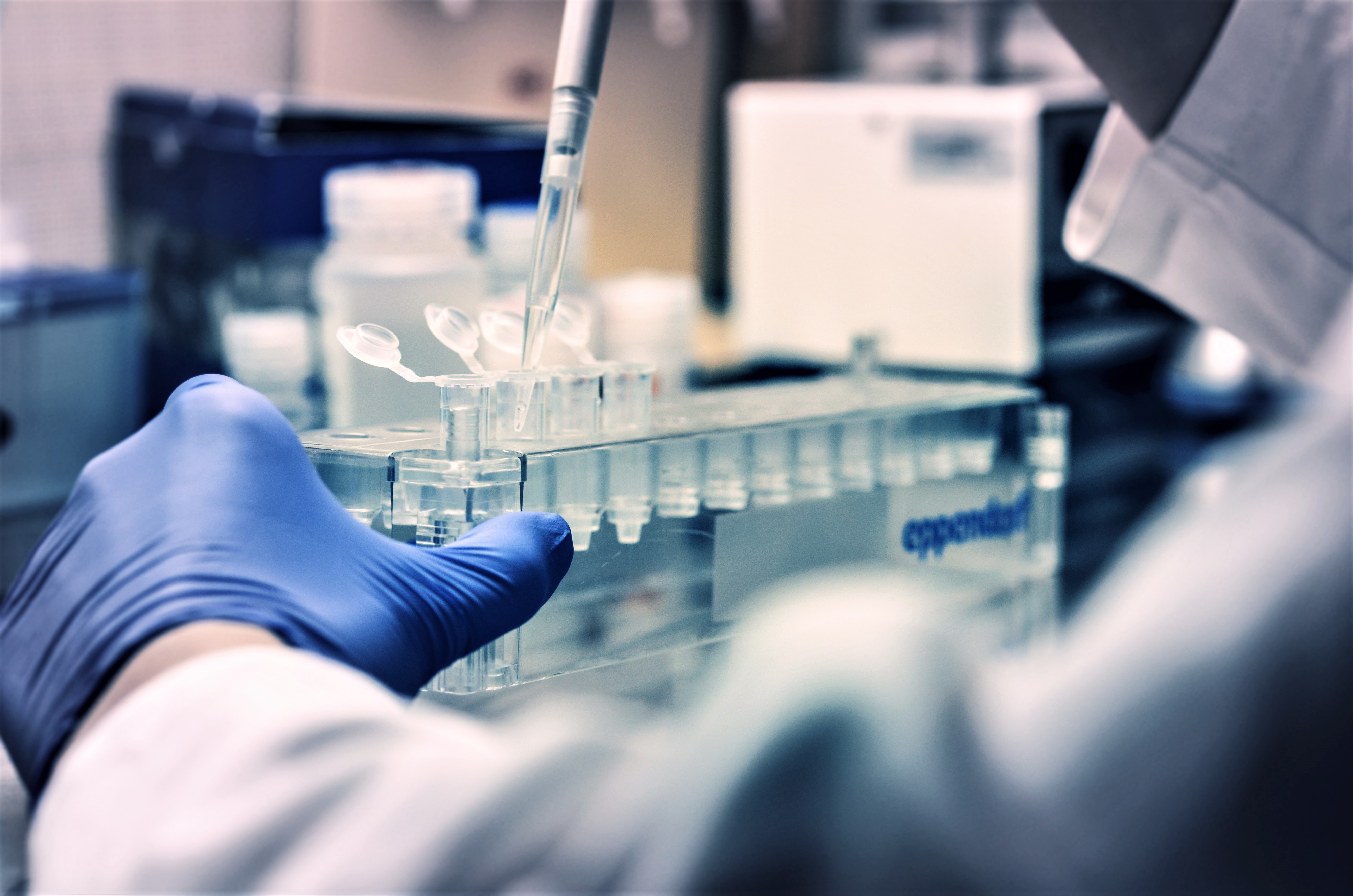
An enzyme that helps break down a pesticide and a protein that carries a carefully arranged sugar coating sound like unrelated inventions. For the scientists designing them, both involve a similar challenge: arranging a molecule so that its shape and chemistry do something specific.
That is the ambition behind RFD4-Proteina, announced by the University of Washington’s Institute for Protein Design and NVIDIA on October 21. UW reports faster computational design and laboratory results across several kinds of molecular task. The release combines the institute’s RoseTTAFold Diffusion lineage with NVIDIA’s Proteina-Complexa work. UW Medicine announcement
For Bright, the encouraging part is the combination of a tool other researchers can inspect and findings they can investigate further. It gives scientific teams something more substantial than a successful animation. It does not establish a treatment, an environmental cleanup service or an independently replicated improvement across every laboratory.
Designing the recipe and the shape together
A protein’s sequence is its chain of amino acids. Its three-dimensional arrangement helps determine what it can interact with and what it can do. Designing a useful molecule therefore involves more than drawing a plausible shape: researchers need a sequence that can support the intended structure and function.
NVIDIA’s technical explanation describes a model that generates sequence and atomic structure together. Researchers specify the molecular context and constraints; the system can refine a proposed design internally or use external scoring tools to guide a search among alternatives. This connects choices that older workflows can make in separate stages.
Consider an enzyme as a carefully arranged workspace. The surrounding protein must hold the working parts in useful positions while leaving room for the molecule undergoing a reaction. Changing one part can alter what fits elsewhere. A method that reasons over those relationships could help researchers explore arrangements that are difficult to assemble through disconnected steps.
The word “reasoning” needs that practical interpretation. It describes computational refinement and search, not a demonstration that the system understands a disease or knows which experiment society needs. Scientists still define the question and decide what evidence would answer it.
What the faster-design claims actually compare
UW summarizes the computational improvement as fivefold to tenfold higher design success and faster candidate generation. Those are developer-reported results, and the underlying measures deserve more attention than the multiplier. UW announcement
The public preprint evaluates protein binding, small-molecule binding, enzyme scaffolding and DNA binding, using 24, 77, 37 and three targets respectively. In its protein-binding comparison, high-thinking RFD4-Proteina has a 10.6% clustered computational pass rate versus 5.9% for BindCraft. A cluster is a group of structurally similar passing designs; this measure is not a laboratory hit rate.
There is a separate version boundary. The released model card explicitly says its efficiency table was measured on a previous model–autoencoder pair and has not been remeasured on the current checkpoints. That historical table reports 71.60 structurally distinct computational passers per GPU-hour for protein binders, versus 13.24 for Proteina-Complexa. It includes generation and common AlphaFold 3 evaluation. These figures should not be silently substituted for the preprint’s results or advertised as a measurement of the current download.
The benchmark methods retain failed attempts and disclose differences in conditioning and timing. Setup, loading, compilation and some other work fall outside the reported GPU accounting. A productive comparison needs both the output criteria and the resources counted—not merely a claim that one system is faster.
Generation speed is another measure again. NVIDIA reports a 3.8-fold generation speedup and 84% less peak reserved memory than RFD3 at 200 residues in its stated benchmark. That does not mean a whole laboratory project becomes 3.8 times faster. Technical benchmark
These distinctions make the result more useful. A team can ask whether the improvement concerns initial proposals, diverse candidates that pass computer checks, or experimentally active molecules. Each can reduce a different bottleneck. None automatically removes the others.
The laboratory findings make the opportunity concrete
The pesticide example moves beyond a predicted structure. The preprint reports 89 active designs among 288 tested in a paraoxon-degrading enzyme campaign, compared with none among 192 RFD3 designs tested for that task. These are the research team’s experimental results under the reported conditions. Experimental study
That is a meaningful next step after computational selection: a molecule made in a laboratory carried out a measurable reaction. It still leaves substantial questions before anyone could use such an enzyme outside the experiment. Would it remain active in a relevant mixture? Could it be produced and maintained affordably? What happens to the reaction products? A real environmental application would need evidence about the complete process and its consequences.
The sugar-coating work illustrates a different kind of precision. The team reports more than 90% oligomannose on occupied sites in eight of nine analyzed designs. The comparison excludes very low-occupancy profiles and a trimer; the supplement says campaign hit rates were not assessed. This measured composition is not a vaccine or treatment outcome. Glycosylation results
Why care about such a specialized result? Because useful biology often depends on details that a headline about protein shape leaves out. The optimistic possibility is that researchers gain more control over the molecular features they are trying to study. Which features are useful for a particular application remains an experimental question.
Open release creates an opportunity to check and improve
The code repository and public model release provide a practical starting point for other researchers. The current paired weight bundle is about 1.74 GB. The documented local workflow requires a supported Linux environment and suitable NVIDIA hardware; a downloadable model is not the same as a tool every laptop owner can immediately run. Bright has inspected the release materials, not run the model or reproduced its experiments.
Licensing is part of that access story. The RFD4-Proteina code and model weights use BSD-3-Clause. Optional refolding software, containers and weights retain their own terms. The companion dataset applies CC BY 4.0 to added annotations, sampling tables and indices, while preserving upstream source terms. It contains a subset of the broader training mixture, not a complete release of everything described in training. Model terms · Dataset card
For a scientific team, openness can mean being able to examine an input, change a constraint, retain an exact version and explain how a candidate was selected. For the wider field, it can make disagreements testable. Another group can discover that a result depends on an important setting, identify a failure or show that the approach transfers to a different problem.
Those possibilities are the reason to value the release. They are not evidence that independent replication has already happened. Access to weights also does not supply laboratory facilities, biological expertise or the resources needed to investigate a promising result responsibly.
A public paper, with revisions that should remain visible
The paper is available now, rather than still forthcoming, and explicitly states that it has not been peer reviewed. The version history records an October 22 UTC revision correcting a Figure 4a plotting error involving averaged replicates and adding confidence intervals and methodological detail for calmodulin binding.
Readers should use the corrected version. Keeping that history visible is useful scientific practice: it allows people to distinguish an updated presentation from the original release. It does not resolve the separate need for scrutiny and reproduction by researchers outside the development team.
Bright previously covered UW’s October computing grant. This is a distinct release, and the grant announcement alone cannot establish how much of a particular result it caused. Our scorpion-toxin feature makes a related point: a molecular interaction is an important result to investigate, with further evidence needed before discussing a treatment.
Bright’s view: give the next experiment a better starting point
The most appealing promise here is a better use of scientific attention. If researchers can generate and examine more suitable candidates, they may spend less time pursuing arrangements that fail an early check and more time investigating the questions that require a laboratory.
That is an opportunity, not a measured saving across research budgets. A useful assessment should count failed designs, time spent preparing inputs and checking outputs, computing costs, synthesis and the experiments needed to learn what a molecule actually does. It should also ask whether improvements persist on problems that differ from the developers’ benchmarks.
Medicine and environmental research both need that discipline. An attractive design is a hypothesis. A laboratory result gives it substance. A reliable application asks whether the result survives the conditions in which somebody needs to use it.
RFD4-Proteina gives researchers more tools and reported findings to work with. The next encouraging chapter would be other teams showing where those tools help, where they fail and which useful functions can be repeated. Opening that path is worth attention precisely because the scientific work remains ahead.
Evidence checked October 22, 2026. This feature distinguishes developer-reported computational and laboratory results from independent replication and practical outcomes. It uses the public preprint and its recorded revision history; no model run, laboratory reproduction, treatment benefit or deployed environmental cleanup was verified by Bright.
How we know10 sources · checked 2026-10-22 · no corrections
Original sources
- UW Medicine announcement ↗ · institution
- NVIDIA’s technical explanation ↗ · institution
- public preprint ↗ · report
- released model card ↗ · repository
- benchmark methods ↗ · repository
- code repository ↗ · repository
- BSD-3-Clause ↗ · repository
- Model terms ↗ · repository
- Dataset card ↗ · dataset
- version history ↗ · institution
Institutions: University of Washington Institute for Protein Design · NVIDIA
- Maturity
- Experimental
- Event date
- 2026-10-21
- Source published
- 2026-10-21
- Captured
- 2026-10-22
- Last source review
- 2026-10-22
- Editorial method
- AI-assisted source review
- Place / relevance
- University of Washington Institute for Protein Design, Seattle; research released publicly · institution-location
Bright compared this account with the linked original and supporting sources and kept reported, budgeted, projected, and observed claims distinct. Bright did not independently audit the underlying records.
Maturity describes the tested or operational setting. Confidence describes support for the particular claim; one does not determine the other.
Revision & correction history
2026-10-22T00:54:03.285Z · Initial source-checked full feature on the October 21 RFD4-Proteina release, preserving checkpoint, benchmark, laboratory, licensing and preprint-revision boundaries.
No corrections recorded.
Keep exploring
Explore the shared question in another setting. These connections do not imply replication.