
AI data centers and the grid bottleneck: what real progress would look like
A new Goldman Sachs forecast highlights the scale of the buildout. The more useful test is whether new computing demand brings reliable electricity, workable connections and fair terms for the people sharing the grid.
- Maturity
- Emerging, stage 2 of 4
- Support
- 10 sources · institution
- Evidence detail
- How we know ↓
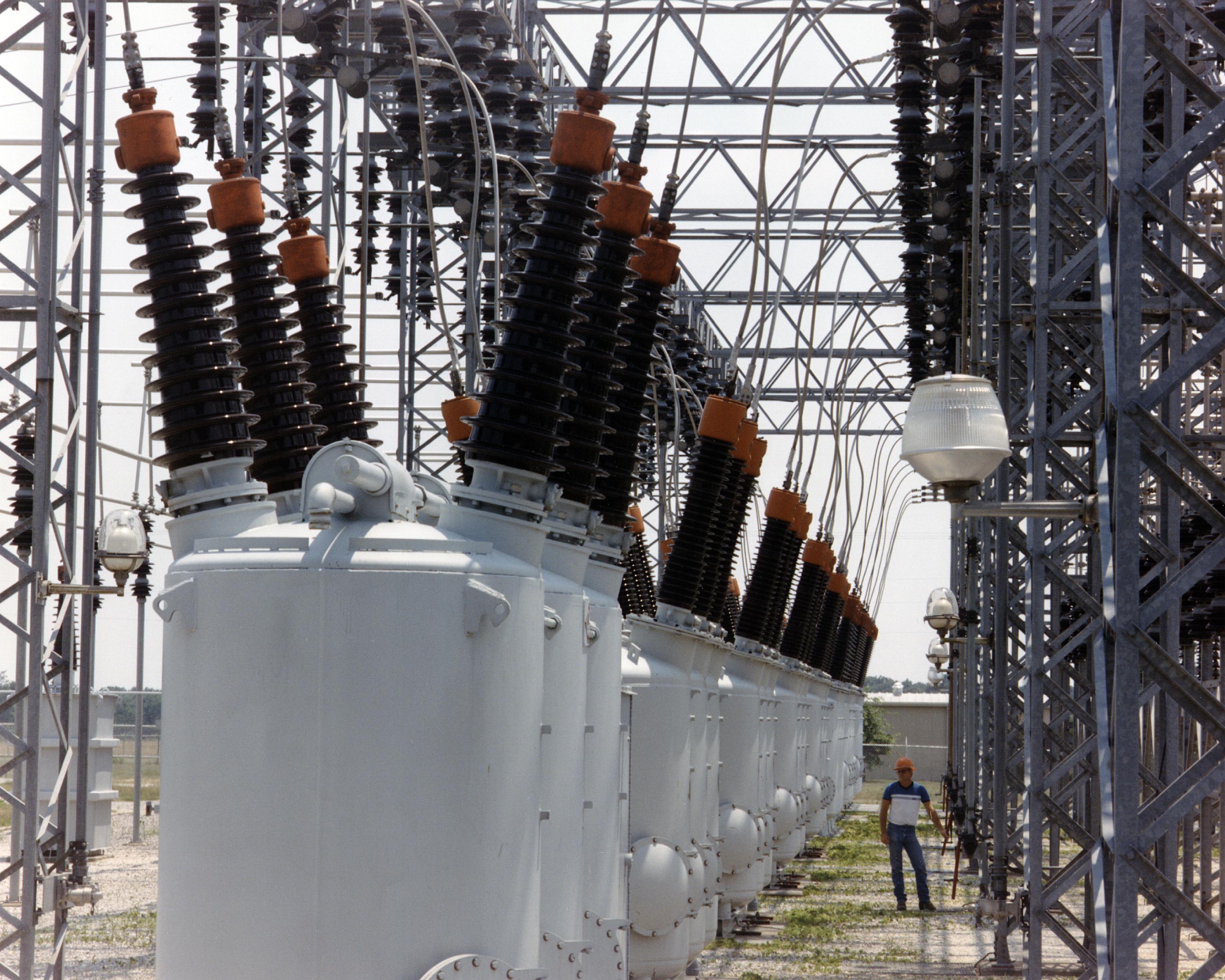
The next stage of AI will depend partly on decisions made far from a model-training lab: where a substation goes, which power project reaches operation, and what happens if a customer reserves a large electricity connection but never uses it.
These decisions can sound like administrative detail. They help determine whether computing capacity becomes available when it is needed, whether a community can accommodate it, and who carries the financial risk when plans change.
In an analysis published on 19 October, Goldman Sachs says the infrastructure constraints around AI now stretch across electricity networks, equipment, permitting, workers and local execution. Its research forecasts a 170% increase in global data-center power demand between 2025 and 2030, with more than 60% of that growth coming from the United States.
That is a forecast for data centers, not a measurement of electricity already consumed by AI. A 170% increase would mean 2.7 times the starting level. It does not mean that household electricity bills will rise by the same percentage, or that every proposed facility will be built.
For people interested in AI's practical benefits, the encouraging possibility is that this demand can help finance a stronger electricity system. Whether it does so depends on the details of delivery and the obligations attached to growth.
Start with the right measure
Several different numbers circulate in stories about AI and electricity. They answer different questions.
Gigawatts describe power or a capacity rating. Terawatt-hours describe an amount of electricity used or generated over time. A proposed connection describes a plan to draw from, or supply, a network. An operating facility provides evidence of what has actually been delivered. Bright's electricity-measurement guide explains why the geography, period and measurement need to stay attached to the number.
These distinctions matter when comparing forecasts. The International Energy Agency's April 2026 outlook projected global data-center electricity consumption rising from 485 terawatt-hours in 2025 to about 950 in 2030. That is roughly a doubling, rather than Goldman's projected 170% increase. The figures should remain attributed to their respective sources, rather than being blended into a supposedly settled prediction.
Neither forecast is a target society is obliged to meet. A useful planning question is how to accommodate plausible growth without treating the most expansive proposal as guaranteed demand. Overbuilding for requests that disappear can be costly; failing to prepare for demand that arrives can be costly too.
What is actually waiting for a connection?
The scale of the proposed supply pipeline is substantial, but its meaning needs care.
Berkeley Lab's 2026 queue research, compiled with GridTracker, counted 1,312 gigawatts of generation and approximately 749 gigawatts of storage actively seeking transmission connections at the end of 2025. Together, that is about 2,061 gigawatts. The dataset excludes electricity-consumer connection requests, including data-center loads, as well as distribution-connected and behind-the-meter projects.
Total active capacity fell 10% from the preceding year. For projects that reached commercial operation in 2025, the median time from connection request to operation exceeded five years in regions with available data. That elapsed period includes more than the time spent conducting connection studies.
The pipeline also has considerable attrition: only 13% of the capacity submitted in 2000–2020 had reached operation by the end of 2025. Those historical outcomes are a warning against counting every application as future electricity supply.
This creates a coordination problem. A proposed generating plant, a requested data-center connection and an actual ability to deliver electricity at a particular location are separate pieces of evidence. Putting their capacity figures beside one another does not establish that they can serve one another, on the right date, under demanding conditions.
The promising work is in integration
There is a current policy response to examine alongside the forecasts. In Powering Artificial Intelligence, published on 14 October, the IEA surveys 34 policy jurisdictions covering about 90% of global data-center capacity.
Its executive summary identifies 134 relevant policies and regulations, nearly 40% announced or implemented within the previous year. It finds substantial attention to making proposed demand more visible, while measures that improve data centers' day-to-day integration with electricity networks are less common. Examples include requirements to contribute to adequate generation and arrangements for flexible operation.
That distinction suggests a better way to assess progress. More accurate applications help planners decide what to build. Useful operating commitments can also change what the system needs to build in the first place.
A proposed agreement to reduce demand during stressed periods, for example, deserves concrete questions: How much demand? For how long? Who can call on the reduction? How will performance be verified? A flexibility promise with no operational detail is difficult to value.
The same scrutiny belongs to an announcement of new generation. Readers should be able to follow it from proposal through approvals and construction to operation. A signed agreement can be an important step without being the final outcome.
Who pays needs its own answer
The fairest buildout will make financial responsibilities visible before expensive infrastructure is committed.
AEP Ohio's data-center process provides an existing example. It uses paid load studies, service contracts, minimum-demand charges and collateral requirements for qualifying customers. Its initial contract term combines a load-ramp period of up to four years with eight further years. A pre-energization agreement requires reimbursement of buildout costs if the customer cancels or delays its project by more than 12 months.
These provisions address a practical risk: infrastructure may be built for a customer whose eventual demand is smaller, later or absent. Attaching obligations to that request gives planners firmer evidence than an expression of interest alone.
But direct connection costs are only part of the picture. Bright's guide to who pays data-center grid costs separates local infrastructure, wider transmission and generation-related questions. Paying for a substation does not establish that every wider cost has been covered. The existence of a protective tariff does not demonstrate that residential bills have fallen.
Bright has also covered Ohio's tariff and PJM co-location cost rules. They are useful background for this debate, not newly discovered results. For a household facing a higher bill, the next evidence still comes from the applicable rates, market records and regulatory decisions, rather than a national AI-demand forecast.
Efficiency leaves room to change the outcome
The future electricity requirement also depends on what computing accomplishes with each unit of energy.
The IEA's April analysis describes rapid improvements in energy efficiency per AI task, alongside expanding usage and more energy-intensive applications such as video, reasoning and agents. Its central projection still shows growing total consumption. Greater efficiency and rising overall demand can occur together.
This gives developers a meaningful lever, even when new infrastructure is slow. Using less electricity to deliver a useful result can make existing capacity go further. It cannot, by itself, tell planners the eventual size or location of demand. That still depends on adoption, workloads and how services are built.
For Bright, the constructive reading is that the outcome remains open to engineering and institutional choices. The evidence does not support treating power constraints as proof that AI progress must stop. It equally does not support treating every proposed campus as a public benefit already secured.
The developments worth watching are tangible: projects reaching operation, realistic load forecasts, enforceable customer obligations, verified flexibility and local cost records. Those are the steps that can turn enthusiasm for AI into dependable infrastructure, while giving communities a clearer account of what they receive and what they are being asked to carry.
What was shown, and what wasn’t
Shown
Goldman Sachs’s October 19 analysis forecasts global data-center power demand increasing 170% from 2025 to 2030. The IEA separately projects 485 TWh in 2025 rising to about 950 TWh in 2030. Berkeley Lab counts 1,312 GW of generation and approximately 749 GW of storage seeking transmission connections at end-2025.
Not shown · limits
- Forecasts are source-attributed projections, not measured AI consumption or guaranteed construction.
- Gigawatts of capacity and terawatt-hours of electricity are different measures.
- Berkeley Lab’s generation and storage queue excludes consumer loads, distribution-connected and behind-the-meter projects; applications are not future supply guarantees.
- Historical queue attrition and elapsed connection-to-operation times do not establish the outcome or schedule of an individual project.
- A protective tariff or payment for a substation does not establish that all wider costs are covered or that residential bills have fallen.
- Efficiency per task can improve while total consumption grows; future usage and workloads remain uncertain.
Bright editorial interpretation
Credible demand plans, enforceable customer obligations, verified flexibility and completed projects could help turn computing growth into dependable infrastructure with clearer local costs.
Still open
Which projects reach operation, what flexibility is verified, and how do actual local costs compare with commitments?
How we know10 sources · checked 2026-10-20 · no corrections
Original sources
- analysis published on 19 October ↗ · institution
- electricity-measurement guide ↗ · institution
- April 2026 outlook ↗ · institution
- Berkeley Lab's 2026 queue research ↗ · institution
- Powering Artificial Intelligence, published on 14 October ↗ · institution
- executive summary ↗ · institution
- AEP Ohio's data-center process ↗ · institution
- guide to who pays data-center grid costs ↗ · institution
- Ohio's tariff ↗ · institution
- PJM co-location cost rules ↗ · institution
Institutions: Goldman Sachs · International Energy Agency · Berkeley Lab · GridTracker · AEP Ohio
- Maturity
- Emerging
- Event date
- 2026-10-19
- Source published
- 2026-10-20
- Captured
- 2026-10-20
- Last source review
- 2026-10-20
- Editorial method
- AI-assisted source review
- Place / relevance
- Global electricity systems; U.S. queue and Ohio tariff examples · unspecified
Bright compared this account with the linked original and supporting sources and kept reported, budgeted, projected, and observed claims distinct. Bright did not independently audit the underlying records.
Maturity describes the tested or operational setting. Confidence describes support for the particular claim; one does not determine the other.
Revision & correction history
2026-10-20T14:50:39.938Z · Initial approved analysis of AI infrastructure forecasts, grid queues, integration and cost obligations.
No corrections recorded.
Keep exploring
Explore the shared question in another setting. These connections do not imply replication.